Rombo plays an increasingly important role in maintaining the connectivity of the Tsavo and Amboseli ecosystem, The Ranger unit whom you support have played this vital role in maintaining this connectivity, and also importantly, ensuring the support we need with the community and acting as a deterrent to further unlawful land use changes and poaching.
Thank you again!
With best wishes,
Richard Bonham
Anti Poaching, Amboseli, Kenya
2025 - Big Life, Kenya - donation of USD 30,000
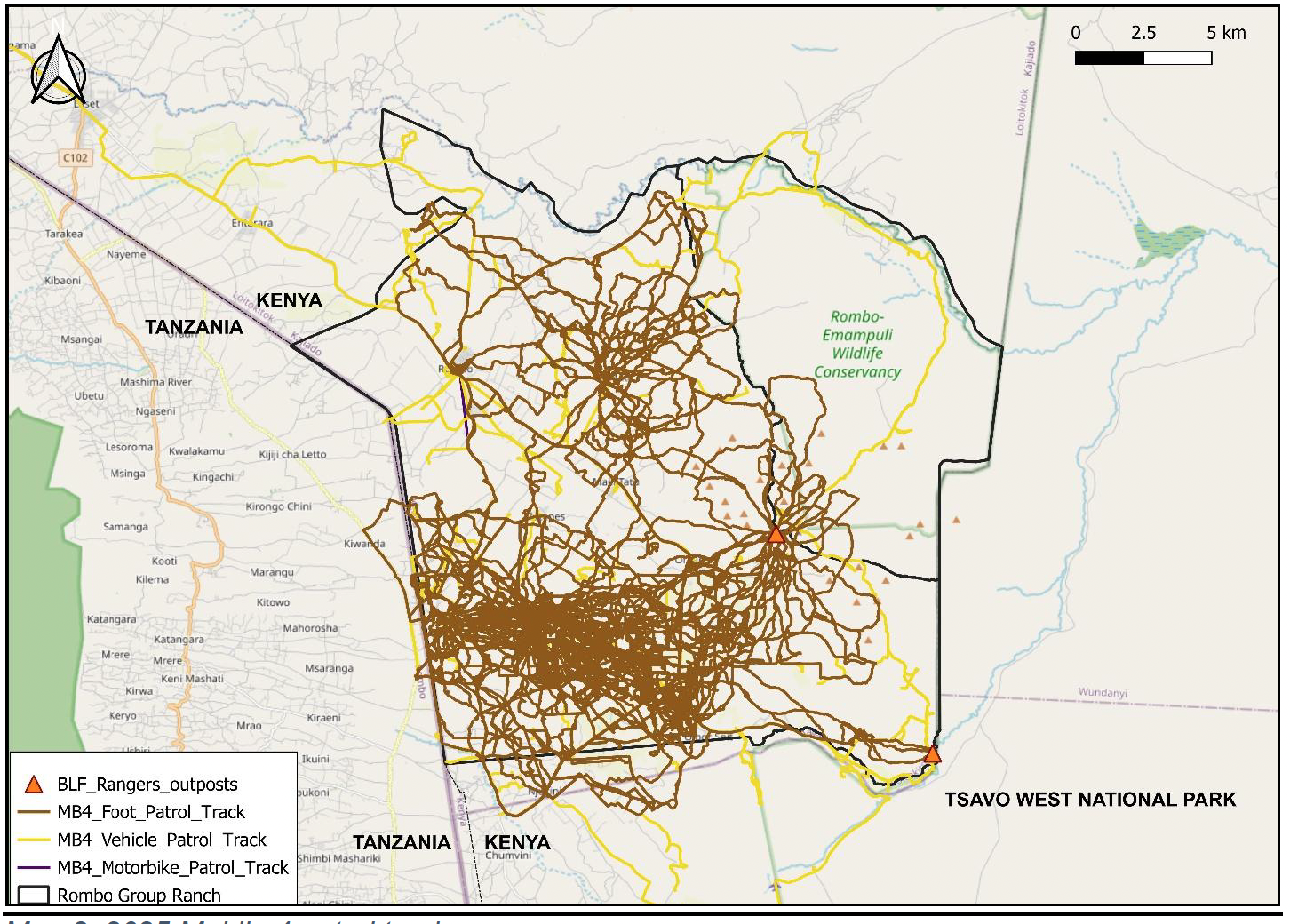
SwissAfrican Foundation continued its support of the Rombo Mobilie Unit. The tasks of this mobile unit includes combating poaching and supporting local communities in human-wildlife conflicts. Rombo is located on the south-eastern border of the Greater Amboseli Ecosystem, with the Tanzanian border to the west and Tsavo West National Park to the east.
Rombo Mobile Unit
This 10-man unit is trained and equipped with mobile equipment and a vehicle, enabling them to stay for extended periods in the bush without resupply and to respond as necessary to any threats to wildlife. The unit operates day and night, focusing on the periphery of the group ranch, which is closer to the international border and has limited patrol coverage from the two permanent ranger outposts in Rombo Group Ranch.
Although the presence of Big Life Rangers in the community has had a significant positive impact, Rombo is a high-risk area due to its proximity to the international border and poaching remains a relevant threat to elephants and other wildlife.
During the period Jan-Dec 2025, Big Life Mobile 4 rangers achieved the following:
- Patrolled 4,827 km on foot over 2,210 hours and 3,987 km by vehicle over 555 hours
- Protected over 400km² of important elephant habitat
- Zero elephants lost to poaching or conflict
- 1 lion lost during predation by spearing inside a boma
- Made 9 arrests in 5 incidents
- Participated in the identification, search and treatment of 2 giraffes for spearing
- Reunited an abandoned zebra foal
- 2 human-wildlife conflict interventions – pushed animals (elephants) out from within settlements, thereby averting possible conflict
- Prevented elephants before getting into farms to crop-raid in 2 incidents
- Recovered the following illegal wildlife products and tools: 1 snare, 1 machete, 1 kadoo, 2 spears, 85.5kg sandalwood, 134.5kg+ bushmeat
 RIP CRAIG, AMBOSELI’S LARGEST TUSKER
Craig, Amboseli’s largest tusker, has died of suspected natural causes at 54 years old in the beginning of 2025. Craig was an icon. He was extremely calm around people and likely one of the most photographed elephants in all of Africa. He lived peacefully alongside the communities that he shared space with.
Elephants with tusks as big as his have becoming increasingly rare, targeted by poachers and trophy hunters, and Craig was one of the largest of those remaining. Craig was a huge presence in Amboseli and will be sorely missed. But he lived a long life and died a natural death, and no creature – human or elephant – could ask for much more.
More success stories related to this project
Our partner
Richard Bonham - Big Life
Big Life protects over 1.6 million acres of wilderness in the Amboseli-Tsavo-Kilimanjaro ecosystem of East Africa. Since its inception, Big Life has expanded to employ hundreds of local Maasai rangers - with more than 30 permanent outposts, 45 ranger units, 11 mobile ranger units, 2 tracker dogs, 14 patrol vehicles and 2 planes for aerial surveillance.

Co-founded in September 2010 by photographer Nick Brandt, conservationist Richard Bonham, and entrepreneur Tom Hill, Big Life was the first organization in East Africa to establish coordinated cross-border anti-poaching operations on both sides of the Kenya-Tanzania border.
The team of 570+ helps to protect and secure wildlife and critical habitat stretching fom the rangelands north of Amboseli to the Chyulu Hills and the Tsavo West National Park in the east, and south to Kilamanjaro National Park. The area is a central connection point for migrating wildlife and contains some of the most important habitat left in Africa.
The number one reason that Big Life’s wildlife and habitat protection efforts are successful is because the local Maasai community is a key conservation partner and benefits from the work.

Learn more about these animals